
Regenerative Medicine for Veterans
Medically reviewed by Dr. Ashley Southern, NMD · Last reviewed August 2026
Veterans and first responders are central to this practice: our co-founder is a U.S. Army veteran of Operation Iraqi Freedom. If you are considering regenerative stem cell or exosome therapy, this page gives you the honest version, what it involves, who it is right for, and how VA and TRICARE coverage actually works.
There is a lot of confusing information out there, particularly around insurance, so we lay out the accurate picture below, starting with the one distinction that trips up almost everyone.
Two different procedures that share a name
“Stem cell” appears in both, but the procedure the VA and TRICARE cover and the therapy most veterans are asking about are not the same intervention.
Stem cell transplantation
- Hematopoietic cells from bone marrow, blood, or cord blood
- Treats blood and immune disorders, most often certain cancers
- A transplant procedure performed in a hospital
Regenerative cell therapy
- Mesenchymal cells for joint, orthopedic, and systemic concerns
- An outpatient regenerative approach, not a transplant
- Not covered by the VA or TRICARE

What the VA actually covers
VA policy on stem cells is set out in VHA Directive 1102.03, "Solid Organ and Stem Cell Transplantation." It governs hematopoietic stem cell transplantation: cells taken from bone marrow, peripheral blood, or umbilical cord blood and transplanted to treat blood and immune disorders, most commonly certain cancers.
That is a transplant procedure performed in a hospital setting. It is not what regenerative clinics, including this one, provide. Mesenchymal cell therapy for a knee or a systemic inflammatory picture is a different intervention entirely, and it does not fall under that directive.
What about Community Care?
Community Care is frequently misunderstood as a route to getting regenerative therapy paid for. It is not, and it is worth understanding why.
Community Care lets an eligible veteran receive VA-covered care from a non-VA provider. There are six eligibility pathways, including when a needed service is unavailable at a VA facility, when access standards for drive time or wait time are not met, and when a veteran and their clinician agree it is in the veteran’s best medical interest. VA approval is required in advance in most circumstances.
But Community Care changes where you receive care, not what is covered. A service the VA does not cover does not become covered because it is delivered in the community. Any clinic implying otherwise is either confused or hoping you are.
What TRICARE covers
TRICARE covers specific stem cell transplants: autologous bone marrow transplant with high-dose chemotherapy, autologous peripheral stem cell transplant, allogeneic bone marrow transplant, allogeneic peripheral stem cell transplant, and umbilical cord blood stem cell transplant.
Separately, TRICARE states plainly that it does not cover procedures that are unproven or experimental. Regenerative mesenchymal cell therapy for orthopedic and systemic conditions falls on that side of the line.
So what does that mean for you
It means regenerative therapy is an out-of-pocket decision, and you should go into it knowing that rather than discovering it after a consultation.
It does not mean the therapy is illegitimate. Plenty of medicine sits outside coverage. But it does mean the burden is on any clinic to be straight with you about evidence, candidacy, and cost before taking your money. That is the test we would want a veteran to apply to us.
Nascent Health was co-founded by Stuart Southern, a U.S. Army veteran of Operation Iraqi Freedom.
Keep your VA care. Add the workup it doesn’t include.
Nobody is asking you to leave the VA. Keep your care and your prescriptions, and bring them with you.
- Comprehensive bloodwork most standard panels don’t run
- An honest read on whether we can help, including when the answer is no
- Coordination with your existing VA care team when you want it
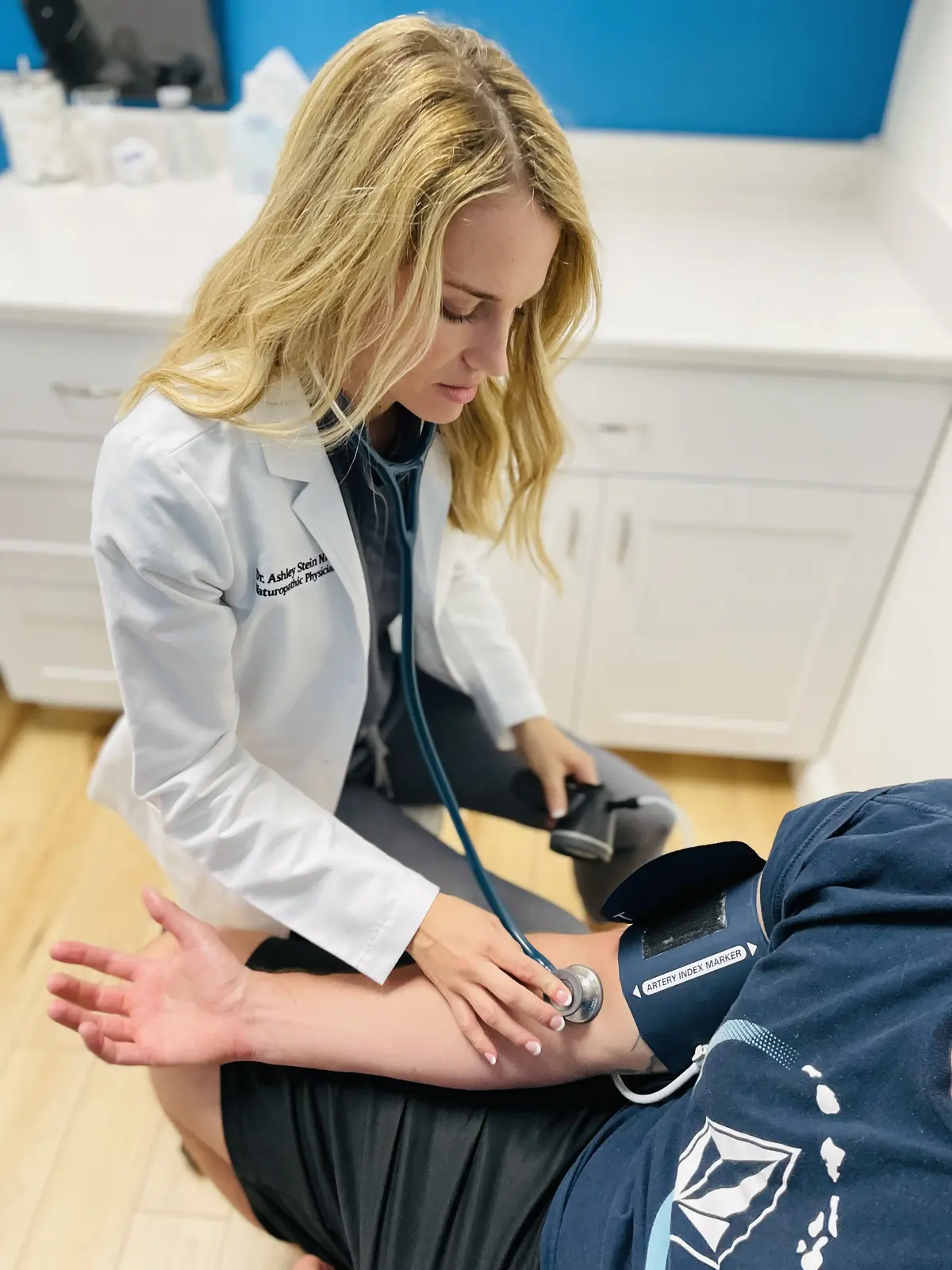

Fifteen years of “normal” labs, and the panel nobody ran
Our co-founder, Stuart Southern, deployed to Iraq in 2006 and came home with a damaged back, thyroid dysfunction, and a history of concussions.
For fifteen years the standard system managed my symptoms, normal labs, normal follow-ups, normal reassurances, and never ran the panels that would have caught what was actually going on. My wife, Dr. Ashley Southern, was the first physician to actually look. She ordered the comprehensive bloodwork insurance doesn’t cover, and within one visit we understood things a decade and a half of standard care had missed.
If you’re a veteran or a first responder who’s been told this is just how it is now, I’d encourage you to get a proper workup before you accept that. If the VA or your insurance won’t cover something, that doesn’t automatically mean it isn’t worth understanding. It means the coverage question and the clinical question are two different questions.
Individual experience, described by the person who lived it. Outcomes vary substantially between patients, and whether any therapy is appropriate for you is determined from your own labs and history at consultation.
Common questions from veterans
Will the VA reimburse me if I pay out of pocket?
No. Reimbursement applies to care the VA has authorized in advance under Community Care, and regenerative therapy is not covered care.
Can my VA physician refer me?
A referral does not create coverage. Some veterans choose to keep their VA care team informed of what they are doing privately, and we think that is sensible. We are glad to coordinate.
Is my service-connected disability rating affected by seeking private treatment?
This is a benefits question rather than a medical one, and we are not the right people to answer it. A Veterans Service Organization representative can advise properly, and it is worth asking before you begin anything.
Should I stop my VA care to come here?
No. Keep your VA care and keep your prescriptions. Never stop a prescribed medication without speaking to the physician who prescribed it. Bring your full medication list and any recent labs to your consultation so anything we design accounts for them.
Do you offer a veteran discount?
Yes. We offer a discount on the first consultation for veterans and first responders. Mention that you are a veteran or first responder when you reach out, and we will apply it and walk you through the details directly.
I have had multiple concussions. Can you help?
Cognitive symptoms after repeated head impact are one of the most common reasons veterans come to us, and they are also why a full evaluation matters. Head injury requires specific management, and part of the consultation is determining whether what you are dealing with belongs with a neurologist rather than, or alongside, anything we would offer.
We serve veterans across the Treasure Valley and the Phoenix metro. Before you commit to anything in this category, it is worth reading the questions we think you should ask any clinic and what stem cell therapy actually involves.
Sources
Start with the panel nobody ran
A comprehensive workup, an honest read on whether we can help, and a protocol designed around what your labs actually show.